Monday, January 28, 2019

OYSTER PLANT (Tradescantia spathacea)


Oyster Plant is a fairly common ground cover plant in Hawaii and often seen at commercial sites.  It does have a reputation for being colorful and hardy but it does need some care and thought about placement if you want a full and healthy ground coverage.
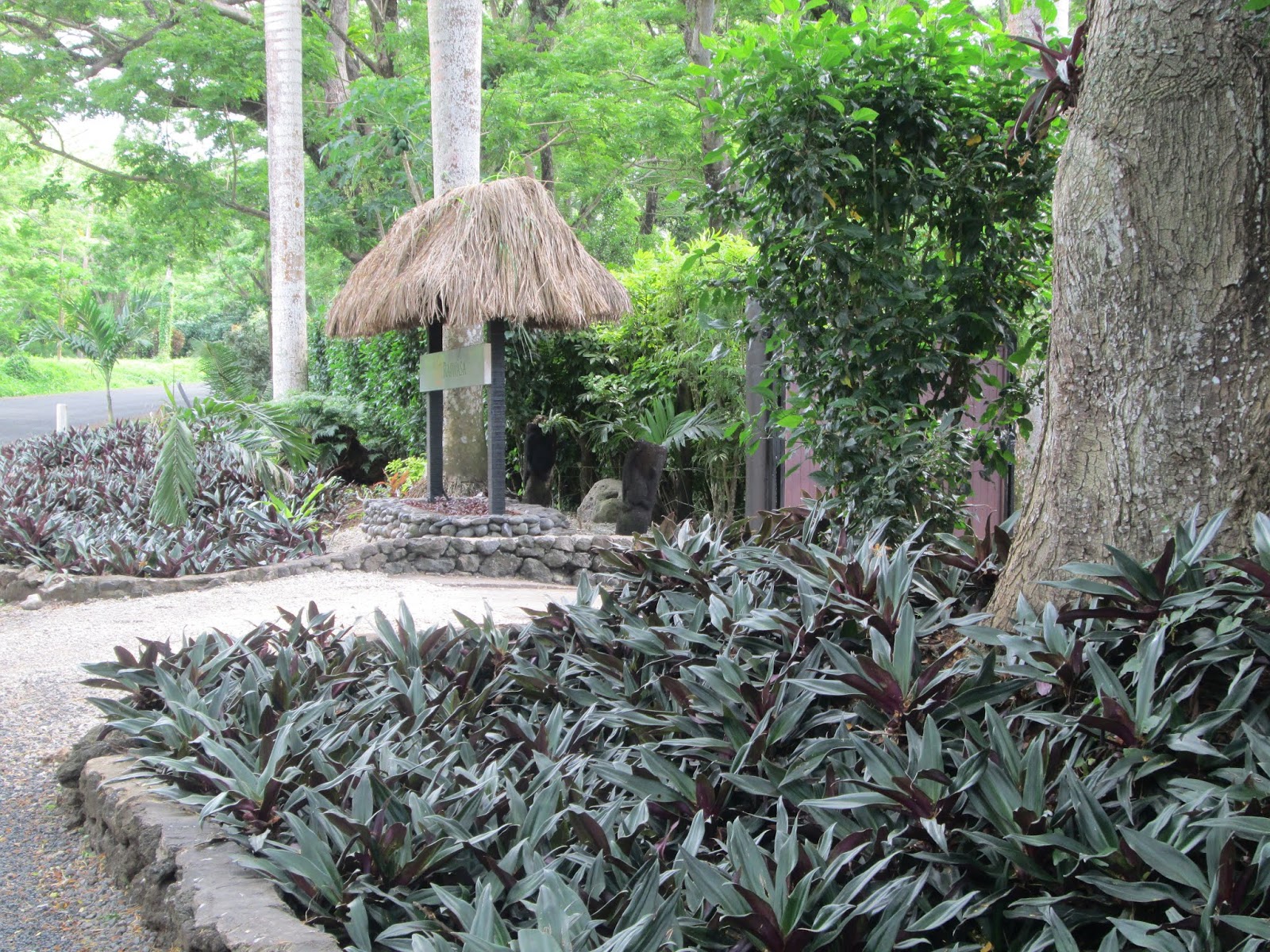
Oyster Plants at an entrance gate, Taveuni, Fiji


I have three kinds of Oyster Plant in my yard.  One is the taller 12"-18" high, green leaf with purple underneath, "regular" plant.  I remember seeing it growing wild on the Mayan temples at Tikal in Guatemala so am not surprised to learn that it is native to Central America and Mexico.  This plant will spread by seeding as well as by vegetative growth and may become invasive in the wrong place.

The regular wild type showing the flowers

The other two types of Oyster Plant I have in my garden are a dwarf 5"-8" high version of the "regular" type above and a dwarf tricolor variety with pink and green striped leaves with a lighter purple under the leaf.  I see pictures on the internet of a dwarf golden color Oyster Plant but I have never seen it here in Hawaii.
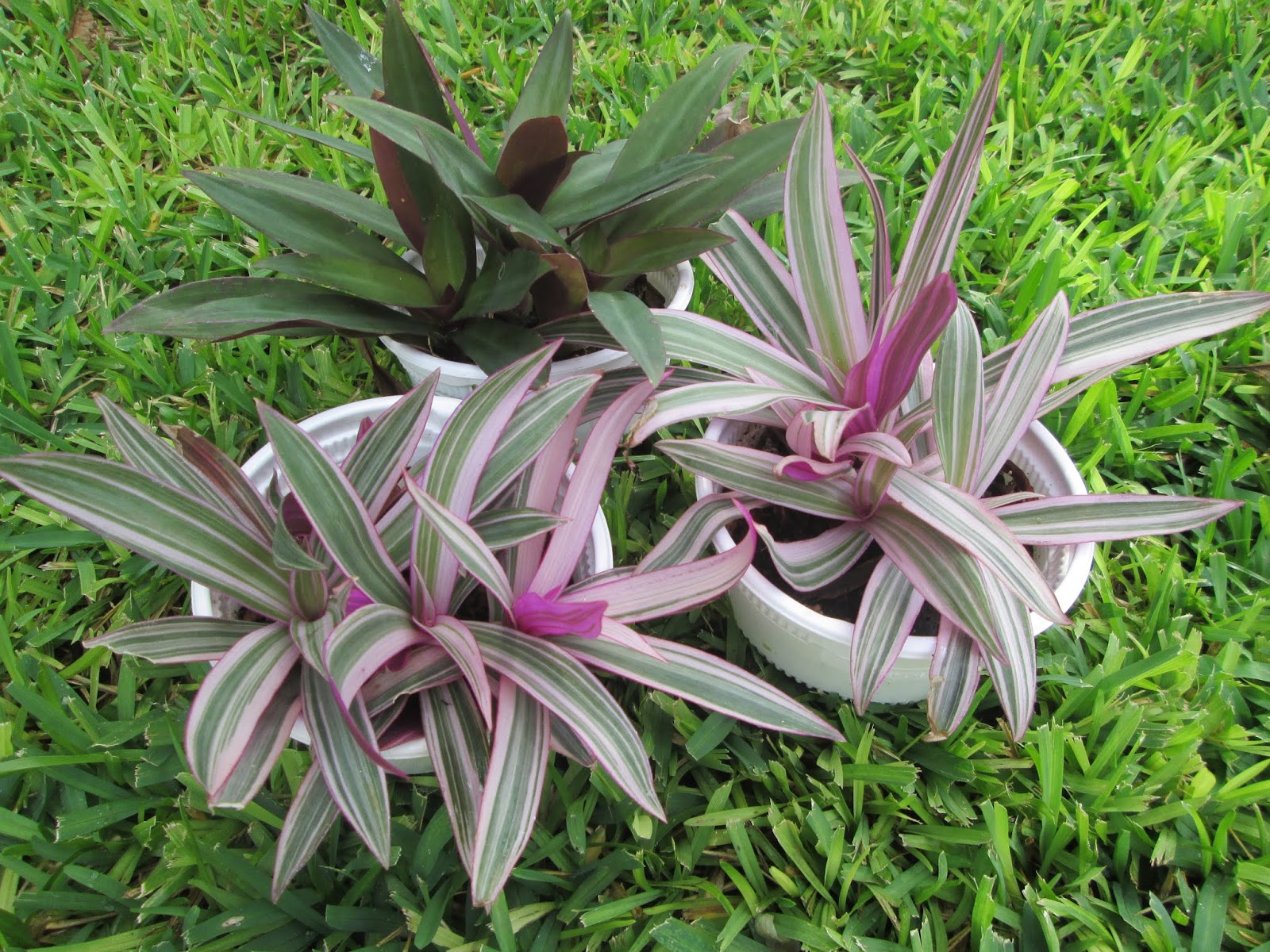
 My two dwarf varieties 


According to the internet, the dwarf varieties are sterile and I have never seen any seedling popping up from them while I have had them from the tall wild variety. Actually, I cannot even recall seeing flowers on the dwarf types.  The  tall "regular" Oyster Plant has little white flowers that turn into pouches of seed that can be crushed in your hand, when they are mature and dry, to sprinkle seeds around on the soil.  The Oyster Plant is quick to produce babies growing from the mother plant and so will quickly fill in spaces as a ground cover and will give lots of babies for you to cut off and pot up to grow more.  Make sure to get the whole of the stalk of the baby plant so that you have the root growing cells at the bottom of the stalk.

Although Oyster Plant is drought and sun tolerant, they will thrive in moist soil and in partial shade.  They will rot if left in soggy conditions.  It seems to me that when Oyster Plant is grown in full sun the planted area will end up looking sad with bald patches after awhile.  The plants do not do well close to foot paths as the plants get broken up if they get stepped on.  I do find that the big brown African snails like to eat and hide among the Oyster Plants in my garden so it is good to keep an eye out for them.

Some people find the sap in the plants very irritating to the skin and will need to wear gloves when working with the plants.  The sap make my hands feel a bit itchy but I just need to wash my hands with soap after working with the plants.  Apparently dogs can find this plant extremely irritating to the skin so it is best not to use this plant if you have dogs running around in your yard.

Aloha

Friday, December 7, 2018

FLOWERS AT PORT VILA MARKET


The main market in the capital of Vanuatu is one of the most interesting markets in the Pacific Islands.  So much wonderful and interesting produce being sold.  Out front of the building is the area for selling cut flowers and pot plants.  Here are a few photos to give you a sense of the place.


Note the green in this bouquet.  Maybe you have this weed growing in your
tropical garden but see how pretty it looks here.

Aloha

Wednesday, December 5, 2018

CUTNUT (Barringtonia procera)


At Waimea Valley Botanical Park here on Oahu there are several Cutnut trees about half way up the walk to the waterfall.  They are beautiful trees with big glossy green leaves and I have long been an admirer of them, especially when they come out in flower.  Each head of leaves on the branches gets a big long fluffy bottle brush like yellow flower that are one to two feet long.  I had done some research on the tree and knew that it was important in places like Papua New Guinea where the nuts are eaten.

A Cutnut tree in flower in Unakapu village, Nguna Island


Last month I visited the Pacifc Island nation of Vanuatu for two weeks and I got really excited when I spotted Cutnut trees during the days drive around the island of Efate.  Then I went for a weeks stay out on the little island of Nguna which is just off the north coast of Efate.  I really hit pay load there!  There were Cutnuts all over the place.  The rustic guest house that I stayed at in the village of Unakapu had several trees in their yard alone.  Finally I actually got to try a Cutnut to eat.  It was very nice.


So I have to warn you now.  I have become a Cutnut enthusiast. I think everybody should be growing a Cutnut tree in their tropical food garden.  You need a protein food in there among the fruit trees.  I am embarrassed to say that I was actually given a baby Cutnut tree some years ago and it died through my neglect.  I hope to try and rectify that and try again.


My lovely host at the Paunivina Guesthouse was patient with all my questions about Cutnut and I am passing the gleaned information on to you.  Agroforestry.net is also a good source of information on useful Pacific trees.  The Cutnut trees are usually grown from seed but will also grow from cuttings. Just plant the whole nut fruit on end in the ground.  The trees will also self seed so you can plant out those babies or kill them off if there are too many in the garden.  Apparently the down side of having Cutnuts in the garden is lots of large dead leaves falling on the ground that that have to be dealt with.  The tree is a medium size tree that grows well in a wide range of soil.  It was growing happily in lowland villages right next to the ocean. It is a tree that provides lovely light shade because of its open canopy so that other shade loving plants can grow under it.  It is also forgiving of hard pruning to keep its height in check.


The fruit take three months to be full size and 3 or 4 weeks more to ripen to maturity.  If you pick too early the nut is too soft.  You can tell the time is right to pick when there is a slight difference in smell and color of the fruit.  I should add at this point that there were two varieties of Cutnut on Nguna.  Some had maroon colored fruit when ripe and others remained green when ripe.  The nut is eaten as a raw snack food in Vanuatu but in other places it is cooked.  Use a sharp strong knife to cut the nut lengthwise from the top.  Scoop out the nut halves and remove the outer pink membrane before eating the raw nut.  Nice and crunchy.

Aloha

Tuesday, October 9, 2018

FOOD FORESTS AND GARDENS NEAR TOWN, SAMOA


Had a quick trip to Samoa last month and these are a few pictures taken as I wandered down a short road near the main town of Apia.


"I want that"
Aloha

Friday, July 27, 2018

YARD LONG BEANS (Vigna unguiculata, sub.sp. sesqui pedalis)


For several years now I have been growing Asian Yard Long Beans in the summer time.  Possibly they will grow OK in Hawaii's winter but I have always associated them with summer along with tomatoes (June 1917) and egg plants.  Fruiting vegetables need more hours of sunlight than the leafy veges.  That being said, my Yard Long Beans get light shade in the afternoon from my Curry Leaf Tree (Aug. 2015 ) and still produces well.

I grow my Yard Long Beans in a 10 gallon pot as I just have to supply enough for me.  I rig up a tall natural trellis of a few dead tree branches for the beans to grow up.  My first plants were grown from beans from a mature bean pod found in a bunch of Yard Long Beans that I had bought.  Actually, I inspected all the bunches at the store to find one with an old bean pod tucked in the middle by the farmer.  I dried the bean pod on the window sill for a few days and then planted several of the beans.  Now each summer I allow one bean pod to grow old on the plant so I can harvest the seeds and store them in the fridge for next summer.


I usually plant several seeds in the 10 gallon container but only the strongest 4 or 5 get to grow big.  I give them a hand full of 10-30-10 fertilizer once they get going and then a sprinkle of the same fertilizer every weekend once the flowering starts.  I am sure this horrifies organic growers but the biggest output of the plants, especially in container plants, really is a result of fertilizer use and that 30% Phosphorus really pushes flowering and fruiting.


The Yard Long Bean has a pretty mauve colored flower that turns to a cream color by mid day.  By the next morning there will be two cute tiny beans growing.....about one inch long   From then on the length of the bean seems to double every night.  Something fun to observe with the grand children each morning.  Although the beans can get super long if you leave them to grow old on the vine, despite their name, you really need to pick them when they are about half a yard long and still fairly narrow and crisp.  If you are into eating them raw, then even more so.  Something different to put on the raw veges and dip tray at the next party.  Mostly I use the beans in stir-fries.  My first meal of the bean season is always a stir fry of canned mackerel in tomato sauce with curry powder, onions and the chopped beans.  A favorite from my days living in Samoa.  I have to have it with boiled bread fruit, (Sept. 2011) which is also in season in the summer.

The Yard Long Beans can last several days in a plastic bag in the fridge.  I freeze extra beans for later use.  I pick beans in the morning and put them in the fridge until I have enough to chop and freeze after a few days.  The flowers, and therefore the beans, grow right next to the vine tips so you have to be careful when pulling off the beans as you do not want to harm the actual growing tip with its reproducing  cells which will go on to produce more flowers and beans if not damaged.

Yard Long Beans being prepped at a produce market in Bangkok, Thailand.

Aloha

PS  Junly 2020
Last month my Yard Long Beans were not developing properly.  The first flush of beans had been fine but the second flush of beans were stunted with shorter beans and the ends were narrow.  I asked around on Facebook garden group if anybody knew what the problem was.  Nutrition?  Disease?  I got no answers there and nor could I find answers on the internet.  Anyways.....I gave the plants a big dose of Miracle Grow fertilizer figuring the plant might need extra micro nutrients and it seems to have solved the problem because the third flush of beans are back to normal.  I am growing the beans in a container so I guess the soil was getting a bit exhausted.

Dec.  2024

Last year I spent a month traveling around the state of Kerala in South India.  Whenever I had fried rice at a restaurant, I noticed that there was finely sliced Yard Long Beans in my meal.  Here in Hawaii, we usually add green peas to fried rice and I do not think I have ever seen the long beans used.  To me it made so much more sense.....afterall, why use peas that are usually have to be bought frozen when you have a local green vegetable in your garden that you can use in your fried rice.  They cut it very tiny so it has a nice appearance of green sprinkled throughout the rice.  Indians are often vegetarians, so I expect the beans add protein to the dish too.

Tuesday, June 26, 2018

NEW CHAIRS IN THE GARDEN


Things are looking up this week.  I have new chairs in my garden and it is amazing the difference they make to the feel of the place.  My old plastic chairs were a few years old and, although still usable, looked very faded and drab with lots of mildew on them.  I had been saving up a few dollars from plant sales while I was on the lookout for some new chairs on sale. (In my retirement the garden has to pay for itself.)  Last week some lovely, sturdy plastic chairs went on sale at Longs Drugs for $9 each and I bought eight of them. The chairs are made in Italy which I think says something about our global economy.  The old chairs I put out by the road and  were gone in ten minutes.  I do not expect these new chairs to last more than a few years.  Between sun, rain, and salt air any chairs I have had in the garden only last three or so years at the most.  I have tried wood, plastic and metal in the past.  Some super expensive ones might work but it seems easier to just go cheap every few years.


Meanwhile, son #2 had also noticed that I needed some new chairs.  He suddenly showed up with four new wood Adirondack chairs that he had assembled and painted.  What a lovely colorful gift that really gives a lift to the garden....and to me!  The paint job is even more impressive when you know that it was done with leftover paint found abandoned next to a trash can.


So, sorry there is no plant info today, but this post is really just to show off my new chairs.  The four Adirondack chairs will go in a shady spot near the kitchen door where we like to sit and talk in the cool of the evening. I will place one of the plastic chairs under the guava tree which is a good shady spot in the morning to sit and have a cup of coffee.  The rest of the plastic chairs will be kept stacked by the house to quickly  come out when we have a gathering for a BBQ or a birthday etc.  I do love being able to provide a nice garden area for my kids and grand kids to build memories in.

Aloha

Saturday, June 16, 2018

GROUND ORCHIDS (Spathoglottis plictata)


Ground orchids showed up in Hawaii a few decades ago but it is only now that I am starting to appreciate them.  In the past I tended to keep my garden green with "useful plants" only.  That meant very few flowers and then they would be shrubs with flowers like Crown Flower where I used the flowers for lei making. (Nov, 2011)  I must be getting softer as I am wanting more flowers in my garden these days.  Just for decoration.....to give me delight.


Several years ago I found a pot of half dead Ground Orchids in the trash can at our local cemetery.  After reviving  and re-potting them I gave them to my daughter to put by her front door.  A few years ago she gave them back to me as they were going to be living off island for a while.  She is back now, but I have kept them near my front door and fallen in love with them.  A few months ago I divided up the clump into three and re-potted them in large 3 gallon size cement pots.  Fabulous!  They loved the new soil and root space and have been putting on a show for me since.


Most orchids grown locally prefer less soil and lots of air space around the roots.  This is why these Ground Orchids are different.  They are terrestrial orchids as opposed to those that like living on tree branches.  They love soil, as the results of my re-potting showed.  Ground Orchids do like some shade, especially to protect them from the hot afternoon sun.  They look great as ground cover under trees.  The Ground Orchid likes moist soil but do not like wet feet so those grown in containers need to be allowed to dry out between watering.  The leaves look rather like baby palm leaves,  Sometimes you will need to trim off some brown leaf tips with scissors to keep the plant looking attractive.


I have seen two color varieties of Ground Orchids.  There is a yellow/mauve flower variety and the dark purple variety which is the more common and the one that I have.  Flowering occurs on 1-2 ft long stems during the warm months.  It is recommended that your fertilize in spring and summer with a controlled release fertilizer to keep the flowering constant.  The tiny flowers come out at the top of the spike while older flower heads will have dead brown sepals on the stem left from older flowers that have died off.  When the flower head is new and young it looks very attractive in flower arrangements and will last up to a week in a vase.  I do not see it sold in the flower shops here in Hawaii but it is popular in the market in Samoa.  To dead head the Ground Orchid you cut off the complete dead slower spike.

Aloha