Thursday, June 24, 2021

KAPI'OLANI PARK at Waikiki

Playing fields with Diamond Head behind


A few weeks ago, I spent five nights at a hotel down at Waikiki beach in Honolulu.  This was actually my very first time doing it and it was wonderful.  It helped me to get my travel groove back again post Covid pandemic shutdown.  My hotel was down at the Diamond Head end of Waikiki and so I was right next to Kapi'olani Park which is a large public green space that is popular with locals and tourists alike.


The band stand area


Kapi'olani Park was established by King Kalakaua in 1876 who named the park after his wife Kapi'olani .  It was an area of 300 acres with a horse racing course along with ponds and walkways.  Of course, the area has previous history from ancient Hawaiian days so that there are memories of ancient heiau/temples and battles there as well.  Surfing was also part of the scene as it is today.  As Hawaii changed from a royal kingdom, to a republic, to US territory, and now a state, the land was kept as a public area.  In 1952, the City and County of Honolulu Dept. of Parks and Recreation did a big renovation of the park area into its modern form.  The park is now 160 acres, so I suspect that the other acres got used for all the city facilities I saw next to the north corner of the park......the library, two schools, a fire station, the headquarters and nursery for the Parks and Recreation Dept. etc.  There is also a small corner garden across the street that holds many native Hawaiian plants which is worth checking out.  Of course there are also the Honolulu Shell for outdoor performances and the Honolulu Zoo, that are on the Waikiki hotel side of the park.  The bandstand area, with seating, holds many local events.  Right behind the bandstand are lily ponds that are a small reminder of the previous ponds and wet land that were filled in as they dredged out the Ala Wai that runs behind the Waikiki hotels. Out in the large central green fields of the park are held many types of sporting activities.


Most of my memories of going to Kapi'olani  Park are around attending rugby tournaments there.  It is an hours drive from my side of the island.  It was nice to spend more time in Waikiki and be able to observe life around the park and gain more appreciation for this public gem.  I enjoyed watching people running and walking around the circumference of the park   The tennis courts all seemed busy.  Summer school soccer teams were out practicing.  Models were being photographed.  Grandpas were playing cards at picnic tables in the shade of the banyan trees.  Mothers were having outings with toddlers in strollers. The coolest, shadiest part of the park was at the back, on the other side of Paki Ave, where seniors were doing yoga.  I made a note of that cool glade for future picnics in town. On the southern side of the park, it continues over the road to an ocean walkway and the aquarium. There are lots of white pigeons in the park, but with careful observation, you will see the  beautiful native White Terns who live in the trees and hatch one huge egg that is perched on a branch without a nest.  I also noticed lots of invasive green parrots who are roosting at night in the ironwoods along the beach side.  Cage escapees who have now grown into a large population that will be attacking your fruit trees if you live in the area and probably will spread around our island. I guess another local problem is the homeless in the area who like to hang out in and near the park. No easy way to solve that.  Still, by the end of my stay in Waikiki, I had become a big fan of the park and am very appreciative that the area has been kept for all of us, locals and tourists, to use.  Imagine if it was hotels all the way to Diamond Head.  


The native plant garden at the intersection of Monsarrat St. and Paki Ave.


My favorite shady, cool spot at the back of the park.

Aloha

Wednesday, May 12, 2021

GOOD GARDEN READS 4

I like this lady!


 https://www.timesofisrael.com/after-reviving-ancient-dates-a-negev-pioneer-plants-seeds-against-a-dry-future/


Sorry...that does not seem to link so you will need to copy and paste the website address in your browser to open it.

Aloha

Friday, April 9, 2021

SNOW PEAS (Pisum sativum var. saccharatum)


At this time of the year, one of my joys is to have Snow Peas stir fried with pork or chicken for dinner.  Snow peas are hard to find in the supermarkets as they do not last well and are expensive when you do find them.  In the tropics, Snow peas only grow well in the winter months so they are an annual event for me.  Every fall, I plant several pea seeds in a large 20 gal. container and push in some long, skinny, dead tree branches to form a trellis for the plants to grow up.  Not all the seeds will grow strong but at least half of them will grow and I have enough peas to give me a weekly treat in the winter.  


I pick three or four peas daily as they grow big enough and put them in a small ziplock plastic bag in the fridge until I have enough for a meal for one.  I do not let the peas grow really big because I like them smaller and sweeter.  I am also on the watch out for bird damage.  If I see the tell tale V beak marks on the pods it is time to cover the peas with netting.  So far, I have not had a problem with birds this year, but it just takes one bird to figure out where he can get a sweet treat and show the others.  When picking the peas, you need to be very careful to not damage the growing points on the plant shoots.  The easiest way to prevent this is to use scissors to cut the pods off.  At the end of the season, I leave a few pods on the plant to mature and dry out to use as seed for the next winter.  As with all container vegetables, I started off with well turned soil mix with compost added and then I give extra fertilizer every few weeks once the flowering starts.  One also needs to watch that the soil is not getting so dried out that the plants are getting stressed.  Only a few weeks ago we were having flooding rains but now suddenly the weather is quite dry and I am having to watch the kitchen garden like it is already summer.


Aloha

Tuesday, March 2, 2021

WAIMEA VALLEY, OAHU, HAWAII


A year ago I was coming back from a trip to New Zealand and glad to get back before Covid 19 closed down the flights between Hawaii and Pacific countries.  I certainly did not expect that there would be no more trips for me in the next twelve months but here I still sit.  Younger ones in the family are making trips to the mainland US but I am cautious enough that I am waiting for the vaccinations before I step on a plane.  Meanwhile, I have had a few small local adventures to keep the rock fever away.  (I am sure you have heard of cabin fever.  On an island we get rock fever!)


A few weeks ago I went with one of my sons to Waimea Valley.  It is one of my favorite places on this island so I like to go there at least once a year.  My son had been there as a child but was seeing it again with adult eyes.  I was able to show him all my favorite side trails that most visitors bypass.


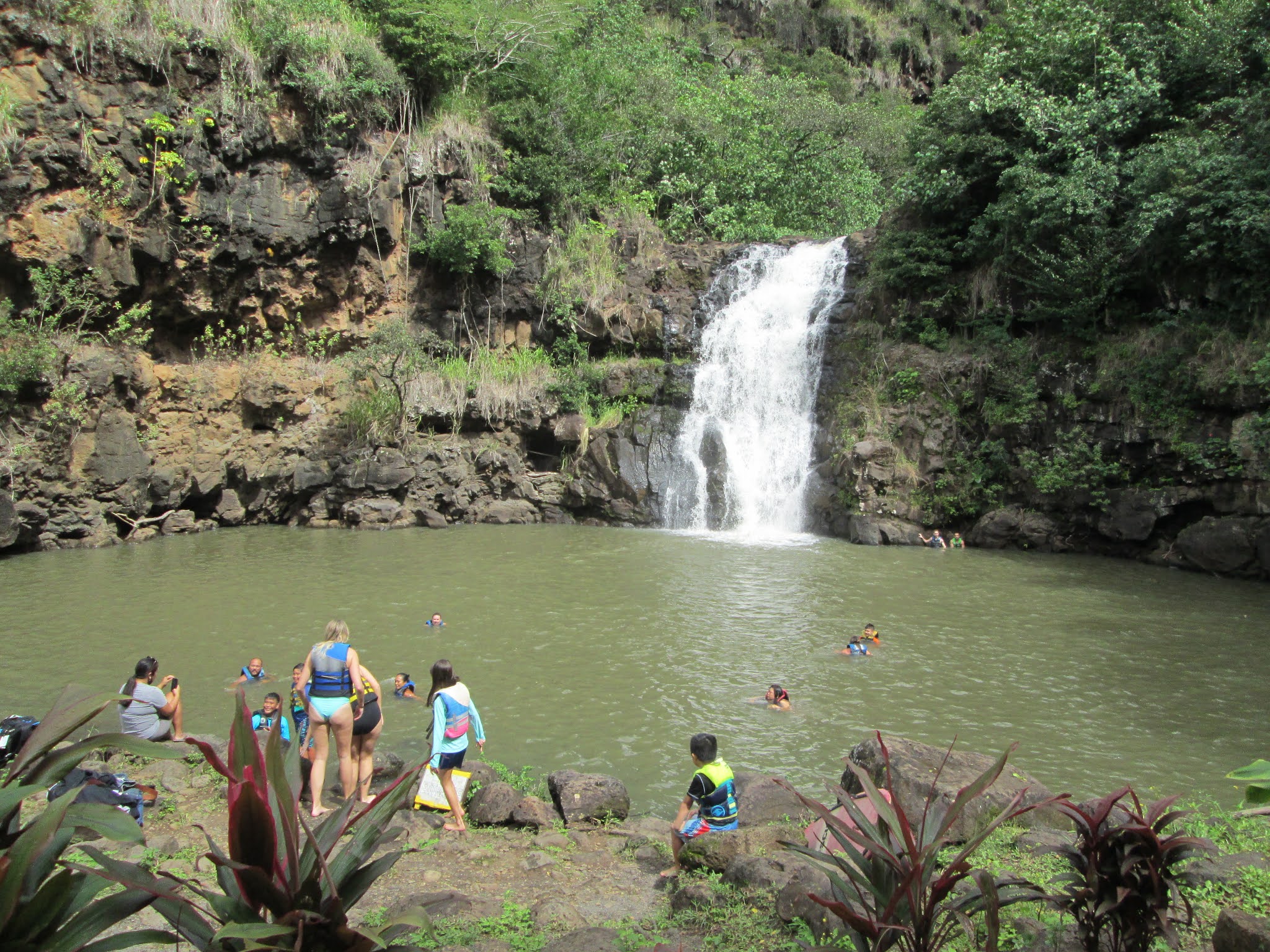
Waimea Valley is up behind the famous surf beach of Waimea Bay on Oahu's north shore.  There is a lovely short drive up the valley to the actual park which is a paid entrance place.  It was established as a botanical park in the 1970's and has gone through various owners and identities since. These days the valley is a protected place watched over by the Office of Hawaiian Affairs.  Because of this there is now more emphasis on the Hawaiian history of the valley and on Hawaiian culture.  Despite that, most visitors come for one thing; to go swimming up at the waterfall.  They buzz up the main 3/4 mile path through the gardens to the big pool in the river formed by the waterfall.  You can always see the visitors who are plant lovers.  They are the ones taking time to explore the plant collections up the side trails and stopping to read the plant labels.


Entrance buildings


Covid 19 has hit the valley financially, as it has all tourist related places.  At least now the valley is up and running again.  If you are a local, it is a good easy outing for you with lots to explore.  The valley park also needs volunteers so if you are stuck in an apartment or condo and miss gardening, they could use your help. The park  holds plant sales on Saturday mornings at their nursery behind the upper parking lot.  A good time to stop by as you take a drive around the island.


Main path up the valley to the waterfall.  The river is down below on the left.


If you are a visitor on Oahu, I heartedly recommend you take a few hours to enjoy the peace and beauty of Waimea Valley.  I have put up a few photos of the park taken on my recent visit.  If you want to learn more about Waimea Valley you can visit their website at   waimeavalley.net.


On a side trail


On another side trail up to ancient Hawaiian sites.


Swimming at the waterfall.


On the upper path looking down to the main path.

Aloha

Friday, January 29, 2021

PIGEON PEAS (Cajanus cajan)


Flower with young pods starting to form.


Over a year ago, near the end of 2019, I bought a tiny Pigeon Pea plant in a 4" pot from Home Depot.  This is the first time I had ever seen them sold in Hawaii so I was thrilled to buy it and try it out in my garden.  I had seen it growing as a 5ft bush in Fiji, so I knew it needed a bit of room.  I planted my baby plant in a big old rusty wash tub that sits in my container kitchen garden area.  I guessed that as it grew into a shrub, the roots would be able to grow into the ground through the rusty holes in the tub.  By March the Pigeon Pea bush was about 3 1/2 feet tall and throwing out sprays of pretty yellow pea flowers.  Within a few weeks I was using the young green peas in a few curry meals.  I did not do any cutting back of the bush but left it to grow on just to see what it did.  I was also reluctant to cut branches back in case I was causing a latter reduction on flowering....when ever that was going to happen.  But it never did flower.  The bush just kept growing bigger and bigger.  By September, it had grown as tall as the house and was giving way too much shade to the other food plants.  Then we got a big rain storm and with the strong winds, and the weight of the rain on the branches, it was just too much and the the whole bush and tub fell over.  I was able to get it back up but I had to chop off a large part in front to make it stable.  Finally, in late November the tree started getting flowers again and by New Years Eve I was picking the green peas and then a few weeks later, I was picking the mature dry peas.  Just a few days ago I called the season over and cut the bush way back down to about 4 ft. high.  The branches got thrown into the compost heap.  I plan on keeping it trimmed low from now on, knowing that it will start to flower in the late fall/autumn, and I will be able to continue my education about this plant.  It seems that I should get five or more years out of it.


Green Pea stage


Actually, it has been a good plant to have around.  It is something new and of interest to learn about while I cannot go off traveling to new places because of the Covid 19 pandemic.  The yellow flowers are pretty and cheerful in the garden and it has been a pleasure to watch the bees come in to visit them.  I have been showing off the the bush to interested gardening friends as it is something different to be growing protein foods in your garden.  I also had plenty of peas to share out with them for growing their own.  I hear that the peas are sprouting well within a few weeks of planting.


Mature green and dry peas 


Pigeon Peas only broke onto my consciousness when I saw them growing in home gardens in Fiji some fives years ago or so.  Some of the Indian shop keepers would be shelling Pigeon Peas on the shop counter top between serving customers.   They would kindly answer my questions about how they used them.  Being a protein filled pulse, the Pigeon Peas are very popular with vegetarians.  They are a common food source in  India, Caribbean and Africa.  It actually was introduced into Hawaii by sugar plantation workers brought from Puerto Rico but still not something I was aware of until recently.  I actually saw someone selling the Puerto Rican food, Arroz Con Gandules, out by the road over Waianae side of the island recently.  So somebody is still using Pigeon Peas in a traditional way.  Meanwhile, I think Hawaii gardeners are becoming more aware of this plant as well.  A few people in local gardening Facebook groups are growing it for the first time.  Those who are into permaculture and growing "food forests" are especially interested.  The Pigeon Peas not only provide protein food for humans but also for chickens and other birds.  The bush is a good "pioneer" plant that can help break up new soil and provide nitrogen for future crops.  It also can be used as a quick growing wind break or to provide shelter for tender young fruit trees.  The leafy foliage of Pigeon Peas  is good fodder for animals like goats and cows or it can be "chopped and dropped" to provide a nitrogen rich mulch if the trees are kept trimmed down in size.  Even the strong lower branches of the plant can be used as a good burning firewood.  Suddenly this plant is looking very prestigious.  Everybody in the tropical world should be growing it!  


One year old bush


Pigeon Pea is an ancient food that has been used for thousands of years.  This perennial legume is high in vitamins, minerals and fiber as well as protein.  To add to all its accolades, it is a tough plant that can handle poor soils and dry periods.  The pea pods can be harvested when they are plump but still green and the peas eaten raw or cooked in things like curries and stews.  You can also leave the pea pods on the bush a few more weeks to dry out and use the dry peas to store for future meals. Do not leave them on the tree for too long as there is a tiny bug that will eat them or they can go musty with the rain.  The peas dry quickly and can be stored for extended periods.  I have been sun drying my mature peas to finish them off and then I will pop them into the freezer for 24 hours to kill any bugs before I store them in jars.  I do this to rice and all the pulses that I buy at the super market too. The dried peas can be used in soups or rice dishes etc. but have to be softened first.  You soak them overnight in water or boil them for 90 minutes to do this.  Arroz Con Gandules is a rice dish with tomato sauce and herbs etc. added while there is a Jamaican version using coconut milk with spices that sounds really good too.


Aloha

PS   Feb 2021

Just noticed for the very first time that our local Foodland is selling canned green pigeon peas.  I am sure that I have not seen them before.  It is a sign of the times.....the local Puerto Ricans are making their claim in local cuisine.


Monday, December 14, 2020

RADISHES (Raphanus sativus)


I am thrilled to announce that I can actually grow Radishes now. Yes, I know!  Kindergarteners grow them because they are so quick growing and easy for an educational experiment.  It is just that somehow they would not grow properly for me in the past.  It was a matter of the Nasturtiums (May '20) all over again.  I was trying to grow them at the wrong time of the year!  In fact, there it is written on the Radish seed packet, "Excellent for autumn crop in the warm areas."


I planted my seeds mid November and have harvested my first small container crop.  I have sown another lot of seeds this morning.  The seedlings pop up within 3-4 days and then the Radishes are ready to harvest by four weeks.  I hope to plant one more lot after that before the weather gets too hot for them.


Radishes have been eaten since ancient times throughout the Old Worlds of Europe and Asia.  This plant is actually related to cabbages and belongs to the Brassica family.  The crisp and peppery roots are not high in vitamins and minerals but have lots of natural chemical properties that help prevent disease in the eater.  The leaves are actually higher in nutrients so do not be quick to throw them out in the compost.  The younger, tender leaves can be used in salads and the older leaves cans be sautéed.


Radishes love to grow in the sun.  Too much shade will make for more leafy growth and smaller roots.  Sow the seeds in place as they do not like being transferred.  Grow them in a rich, loose soil.  Thin out the seedlings to 2" apart.  It is important to keep the soil consistently moist but not waterlogged. 


Aloha

Monday, November 23, 2020

GALPHINIA ( Galphinia gracilis)


Galphinia is a native of Mexico, so right away you know that this is another of my beloved tough plants. It loves warmth and sun and keeps blooming throughout the year.  It can take partial sun but it will probably means less flowering.  The internet says it likes fertile soil but I find it grows fine in my sandy soil. Once established the plant needs little watering although it is helpful during a hot dry summer.


Galphinia is a shrub that grows very fast.  Make sure you give it some room to grow as it naturally can grow several feet high and wide.  It develops low branches that fill in as a ground cover.  If you do not want it to grow so big you will need to keep up with the trimming back.  I give mine a severe haircut about every year and pinch off the tips to shape it during the year.  Pinching does delay the flowers blooming though.  I decided last year to cut off all of the lower growth and turn the shrub into a full head on a stand shape so that I could have other stuff below it.  


Galphinia is a hardy plant and I have had no problems with disease or pests.  Babies can be grown from seeds or cuttings. I know I have done so many years ago, but I do not remember it as an easy plant to propagate, so it may take some experimenting for the home gardener.  I do love this plant for its persistent show of color in the garden and for its easy care.  It is not so good as a cut flower for flower arrangements unfortunately.  In Mexico it is used in several ways in traditional medicines.


Aloha